Kanedai Touki × Amenoi
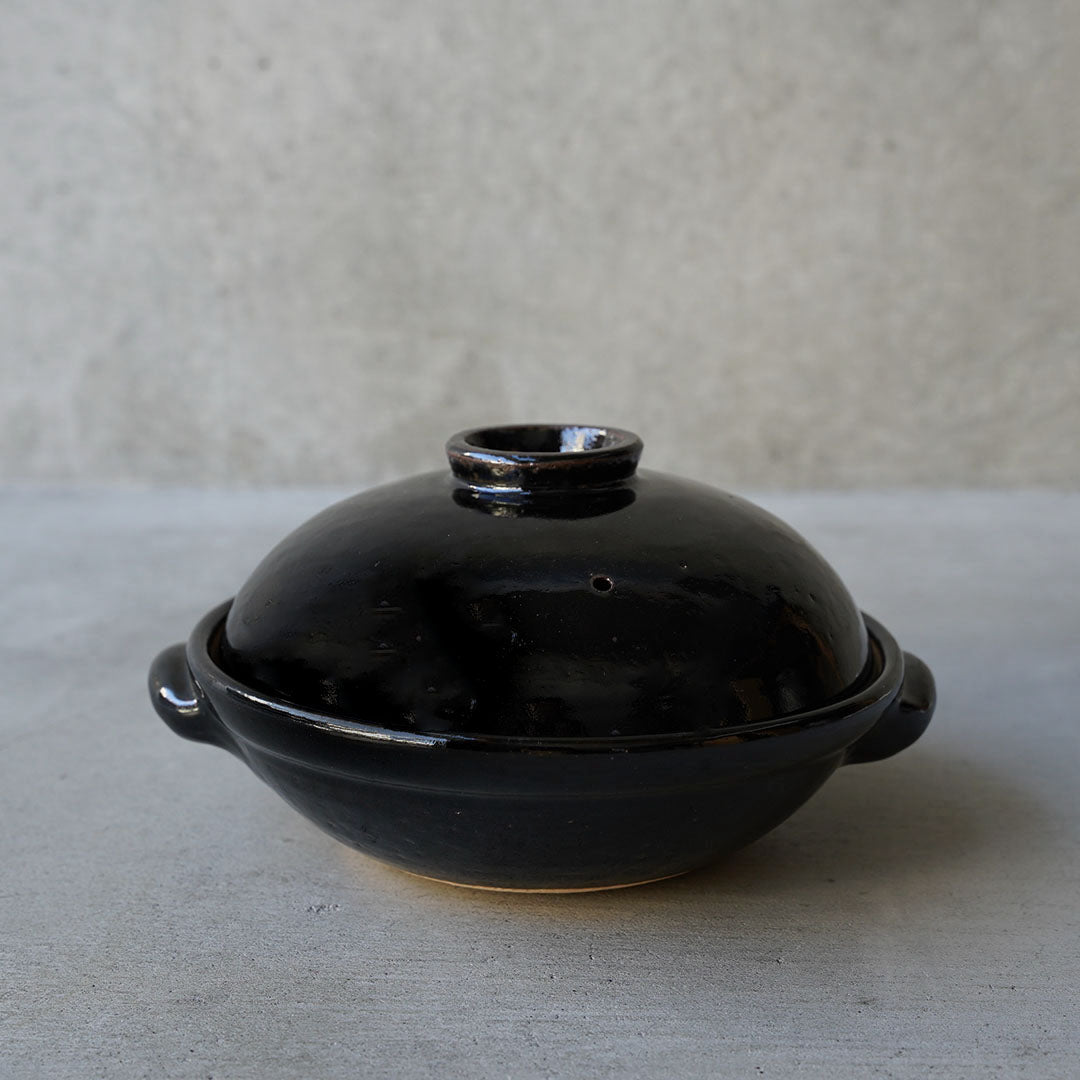
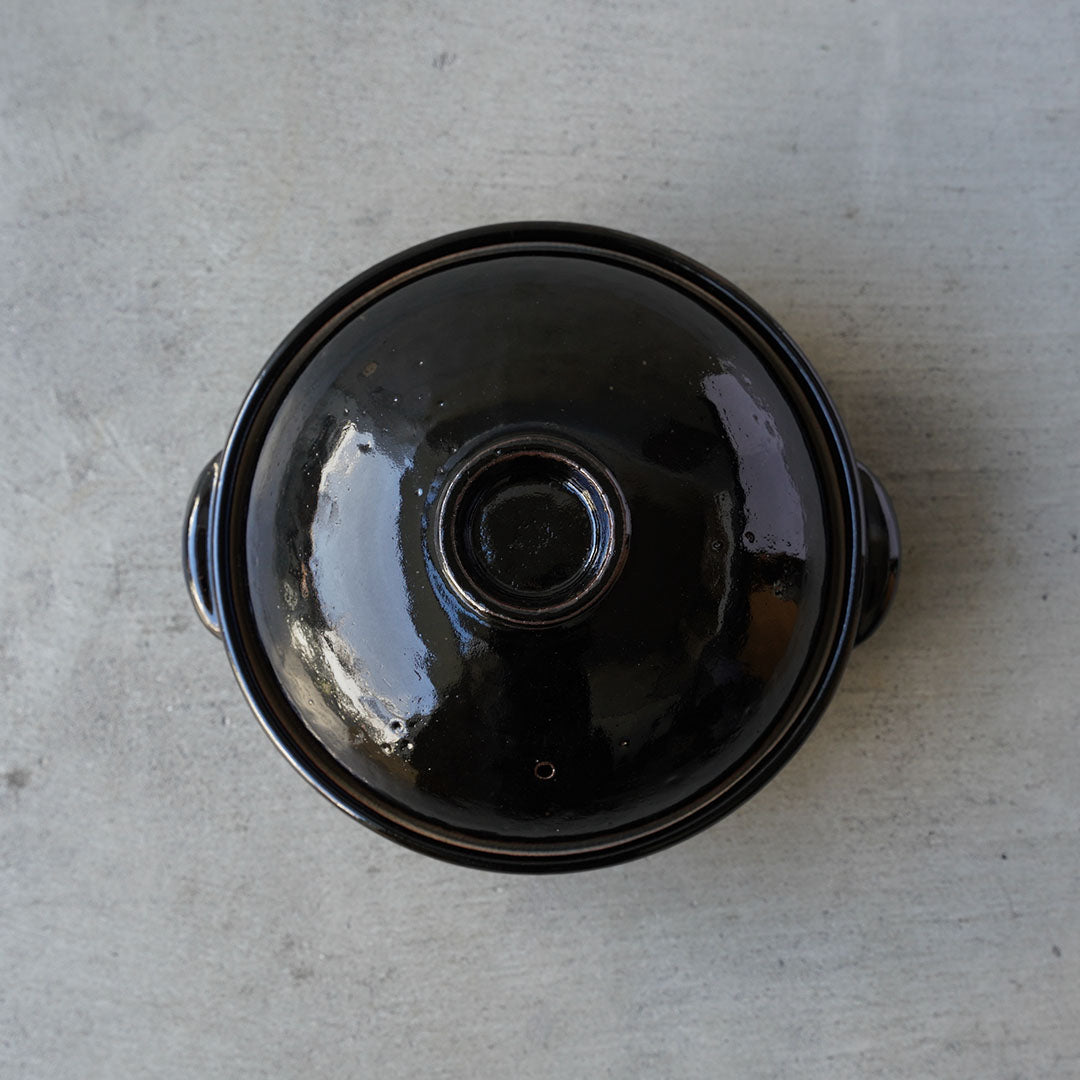
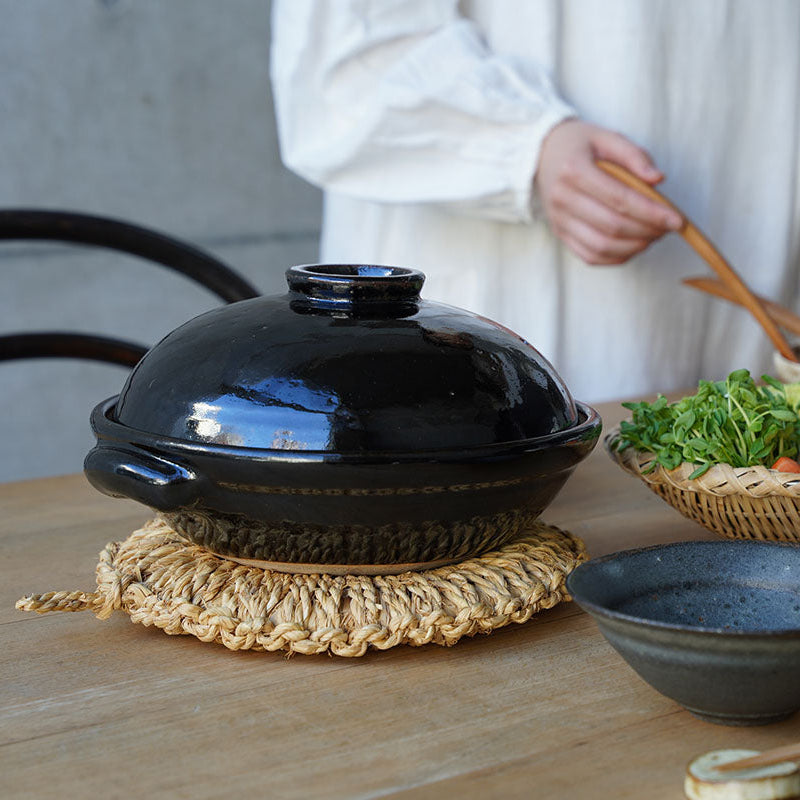
This is a 7-sun earthenware pot from Kanedai Touki, a pottery kiln established in 1872 in Marubashira, Iga City, Mie Prefecture, a production center for Iga ware, with a history of 150 years.
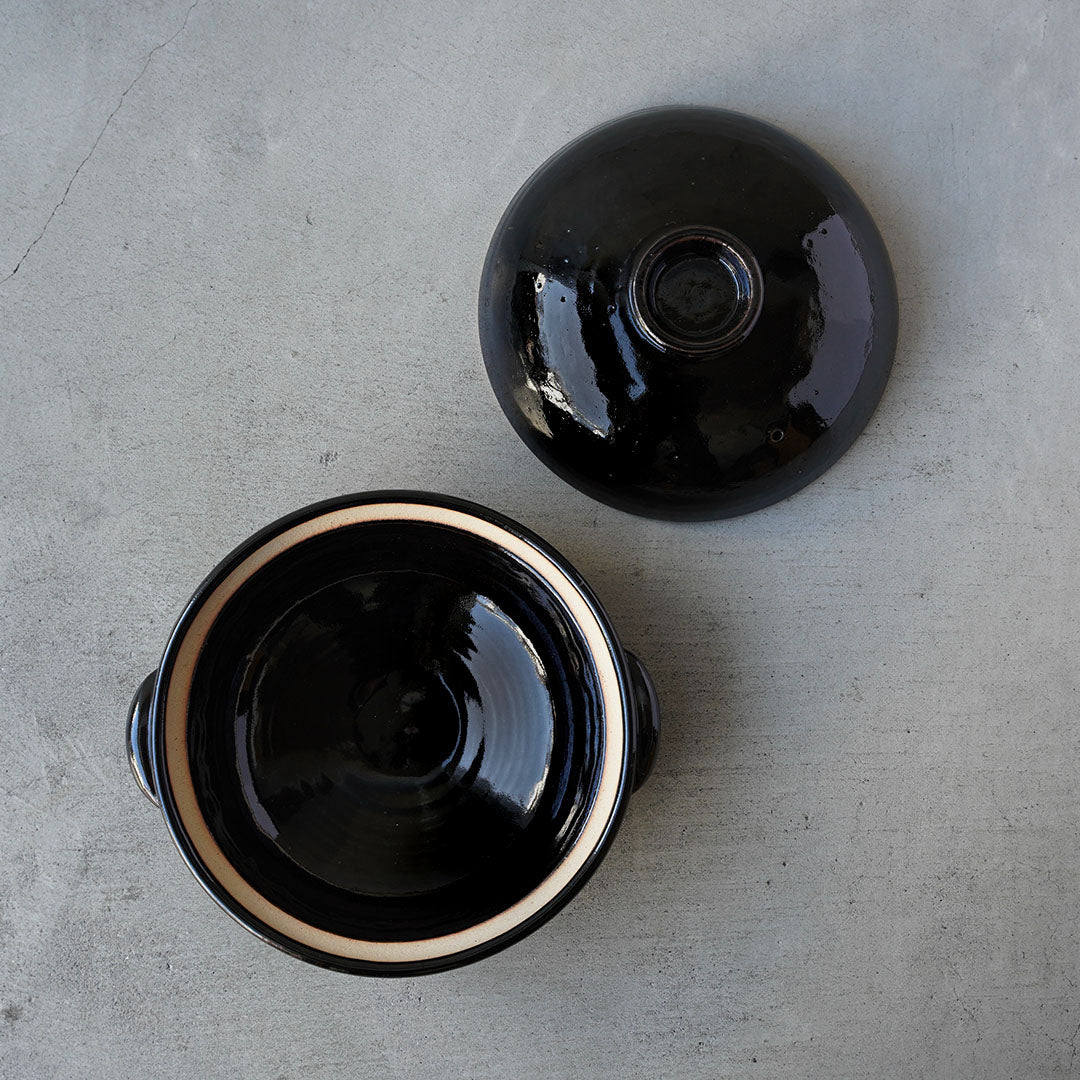
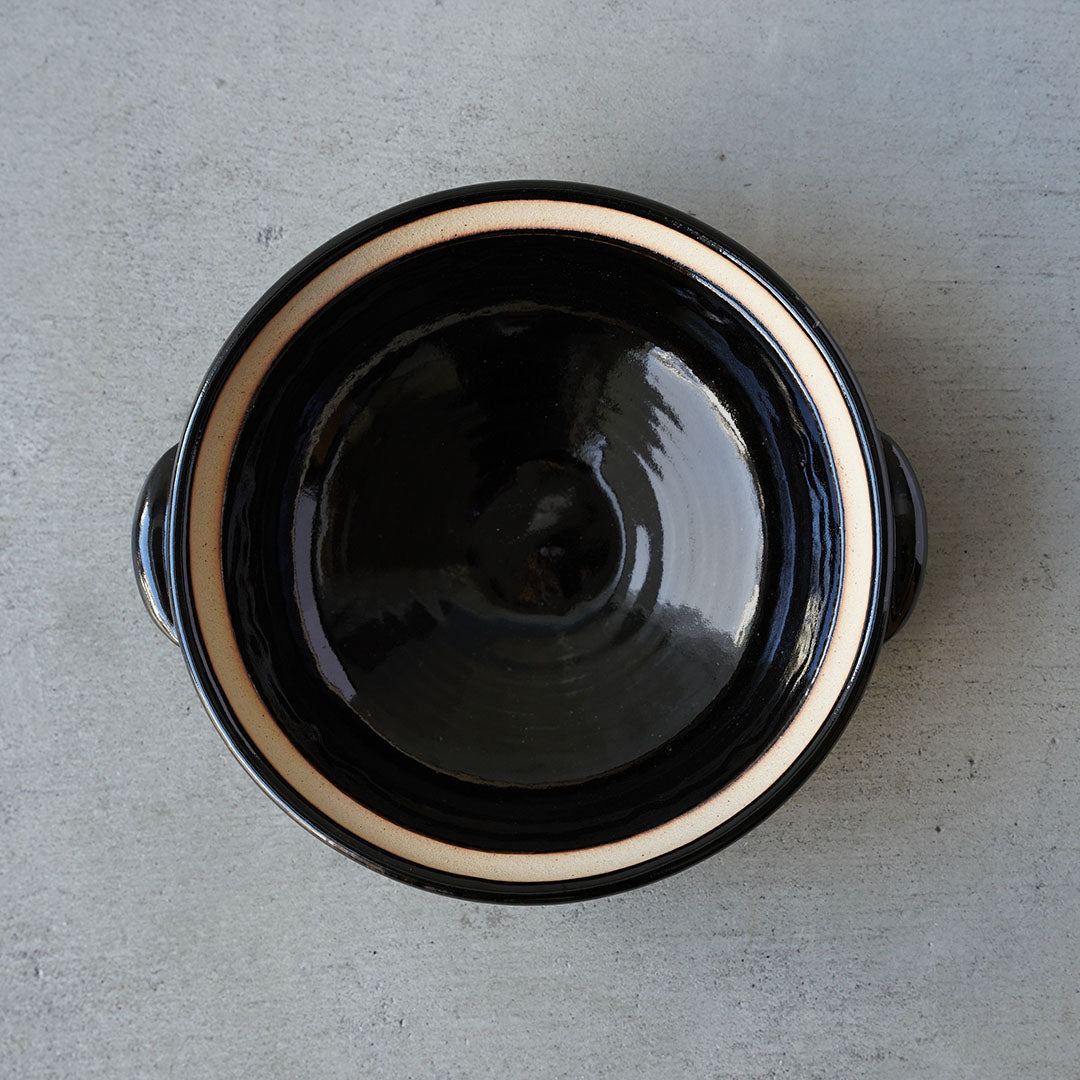
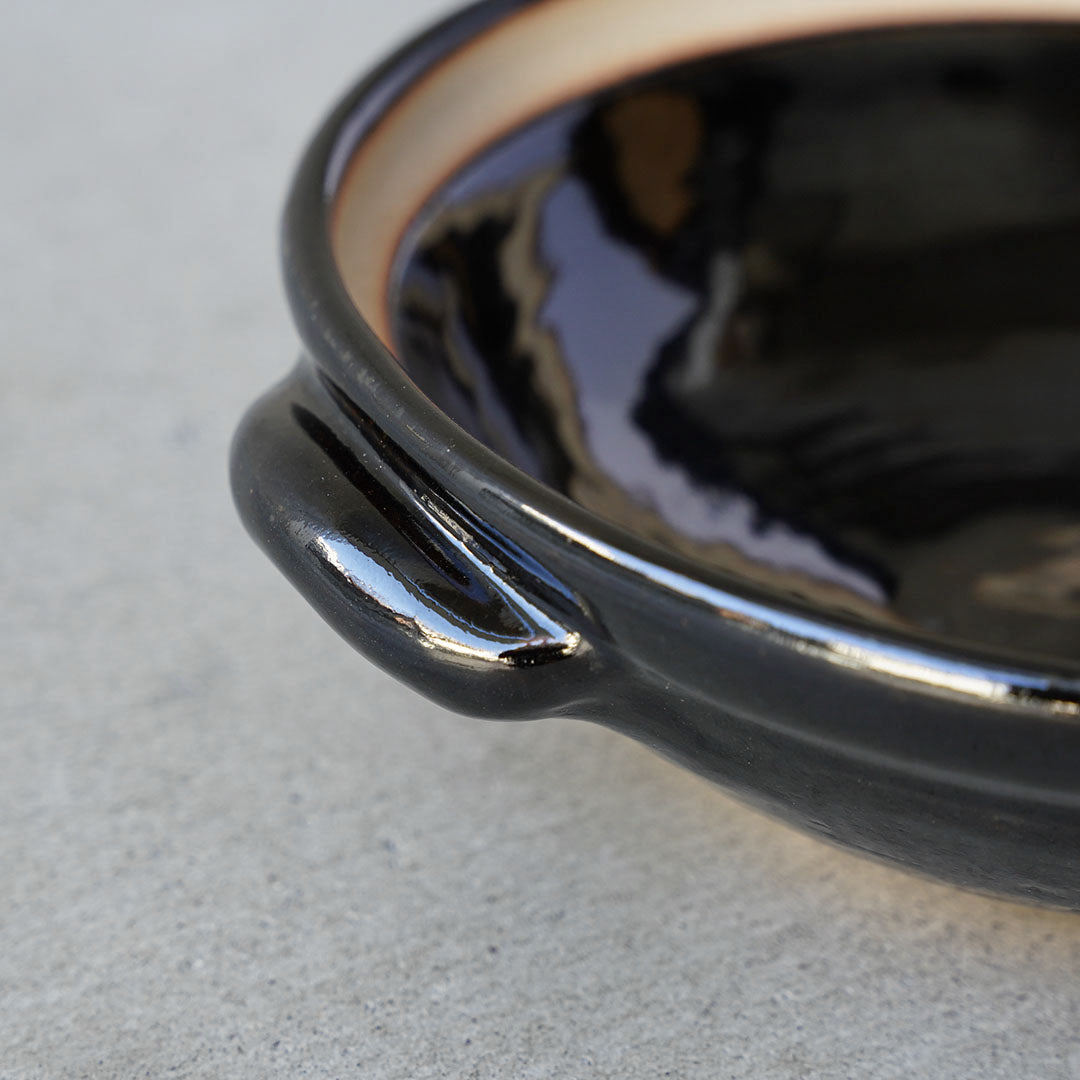
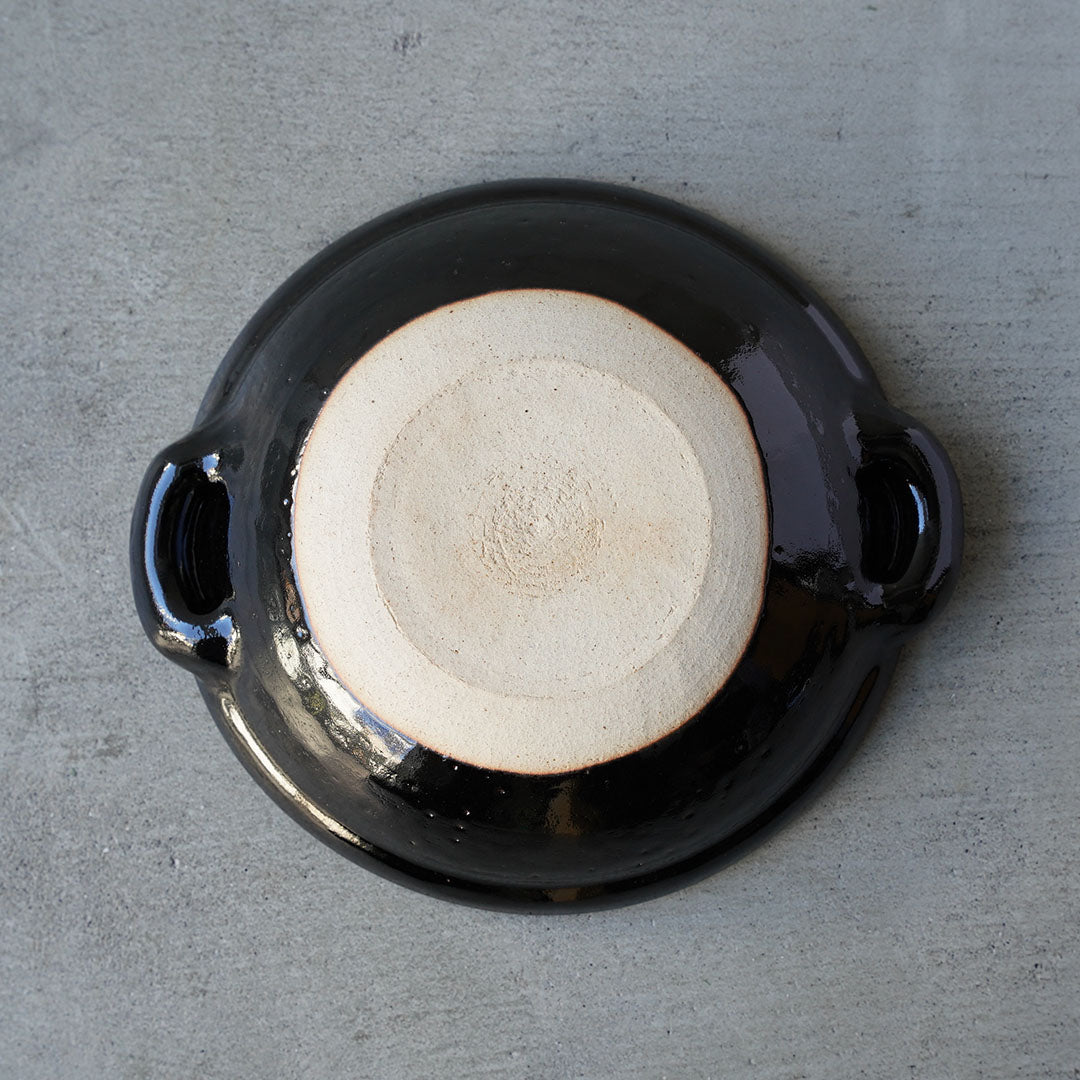
The 7-sun earthenware pot features the glossy black color of "Tenmoku Glaze," which is rich in iron and common in Iga ware.
Iga has historically been known for its high-quality pot clay, so this pot is made from 100% Iga clay and contains no petalite.
It is said that if petalite were included, Tenmoku glaze could not be used, and the current color and texture would not be achievable.
While adding petalite has the advantage of making the pot less prone to cracking when heated, the heat penetrates quickly, making it difficult to fully bring out the flavor of the ingredients.
In contrast, Iga earthenware pots heat up slowly, allowing you to enjoy delicious hot pot dishes that bring out the natural flavors of the ingredients.
 Kanedai Touki: Inheriting her father's legacy
Asuka Oya is the current head of Kanedai Touki.
Previously, she, her father Masato (the fourth generation head), and her mother Hiroko, worked together, with Asuka having grown up watching her father work since she was a child.
After Masato's sudden death in June 2021, Asuka, who had mainly been in charge of finishing, attended the Shigaraki Ceramic Research Institute for a year to study pottery wheel techniques to master molding. Now, as the head of the family, she and her mother work together to carry on the family business and dedicate themselves to pottery making.
Asuka's positive desire to "preserve the traditions that have been passed down for generations," combined with her long experience watching her late father Masato, results in an earthenware pot that is delicate yet somehow robust, offering an absolute sense of security.
 Iga Ware
Iga ware is famous as a production center for earthenware pots, and the Iga region, once said to be the bottom of Lake Biwa, is known for its heat-resistant clay.
Pottery made from this clay develops countless holes when organic matter within the clay burns out during high-temperature firing.
These holes give it excellent heat resistance; once heated, it cools slowly and distributes heat evenly, making it ideal for earthenware pots and other ceramic items. It is highly durable, strong, and long-lasting.
The porous clay of Iga, with its many air pockets, is said to "breathe," providing a high far-infrared effect that gently and thoroughly heats ingredients to their core.
In addition to being practical, it has a simple and warm design, with an underlying strength, the texture of the clay, and a background protected by craftsmen who inherit a long history and traditional techniques. Its charm increases with use, and you can enjoy its aging process, making an earthenware pot a cherished item to have in every home.
 Seasoning the Pot (Medome)
To use it carefully and for a long time, it's important to be aware of the usage precautions due to the nature of the clay.
Before using it for the first time, a process called "medome" (seasoning) is essential.
Cook leftover rice with a little water over low to medium heat until it becomes a paste.
Once it bubbles and thickens, turn off the heat and let it sit overnight.
The next day, discard the contents, wash, and dry thoroughly. Then it's ready.
Seasoning the pot prevents water leakage even if cracks appear at the bottom, allowing you to use it with peace of mind.
 Gathering Around Japanese Hot Pot Dishes
Kanedai Touki's earthenware pots keep food warm, so I don't need to reheat them often, which is a great help.
Another nice thing about hot pot dishes is the wide variety of recipes available.
In Japan, with its broth culture, you can enjoy a wide range of hot pots, from classic to unique, such as nutritious hot pots using seasonal vegetables, sukiyaki, shabu-shabu, motsunabe (offal hot pot), sundubu (Korean soft tofu stew), and ethnic-style hot pots rich in seafood. Feel free to make whatever your heart desires, depending on the season and your mood.

・Fine cracks may appear on the surface of the earthenware pot, but this does not affect its use.
"Medome" (Seasoning): Cook leftover rice with a little water over low to medium heat until it becomes a paste.
Once it bubbles and thickens, turn off the heat and let it sit overnight.
The next day, discard the contents, wash, and dry thoroughly before using the earthenware pot.
Seasoning the pot prevents water leakage even if cracks appear at the bottom, allowing for continued use.